Research-driven marketing isn't new to me. The channel is.
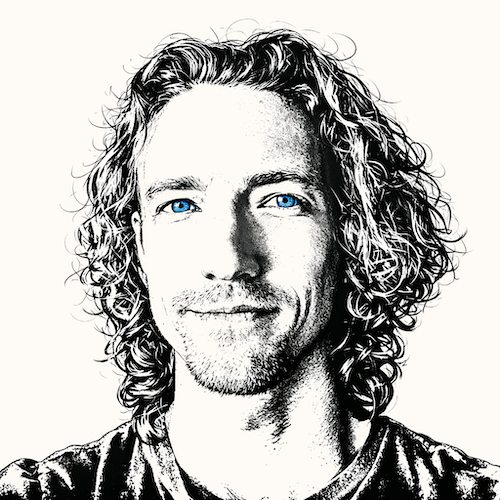
I'm Dan Russell. I spent nine years running a conversion rate optimization agency, unlocking $50 million in revenue for clients through neuromarketing tactics grounded in behavioral science research. Now I'm applying that same research-first approach to the newest channel in marketing: AI search.
AI decides who gets found.
We make sure every business can see how.
AI search is a black box deciding which companies get discovered — and most of the industry around it profits from keeping things confusing. Quoted exists to do the opposite: use AI to decrypt AI. We run the measurements, do the statistics, publish what we learn, and translate it into plain words — so that keeping up with AI search doesn’t require a data science team or a five-figure retainer.
We call the open half of this work Project Glassbox: our research publication, our free tools, and the standards below. It’s a company built to be driven by impact more than income — because in a category this new, trust is the only currency that compounds.
Five commitments. Permanent.
1 · Our research is free, forever.
Everything we learn about how AI search works — outside client engagements — is published openly in The Glassbox Report.
2 · No naked claims.
Every finding ships with its evidence: sample size, effect size, confidence tier, and what we don’t know yet.
3 · Honest expiry.
We re-test our findings every week. When one stops holding, we retire it publicly — no stale advice, ever.
4 · The data does the talking.
Whether or not it’s in your favor — or ours. Anything less, and you’d fall behind.
5 · Plain words.
If you need a statistics degree to understand us, we’ve failed.
Nine years of research-driven optimization
For nearly a decade, I ran a CRO agency built on a simple principle: don't guess what works—measure it. We used neuromarketing and behavioral science to understand why people made decisions, then tested those hypotheses with data.
I built a team around research and testing. We ran thousands of experiments across dozens of verticals. The result was $50 million in measurable revenue unlocked for our clients—not from hunches or best practices, but from statistically validated findings specific to each business.
That experience taught me something that most marketers never learn: generic advice is almost always wrong for your specific situation. The only way to know what works is to measure it, longitudinally, in your context.
Everyone's chasing citations. Nobody's studying what makes them stick.
There's a massive surge of interest in getting cited by AI engines. Companies are investing real money in AEO and GEO services. But almost nobody is asking the harder question: once you get a citation, how do you keep it?
I watched the same pattern play out in CRO for years. Companies would invest heavily in driving traffic, then watch conversion rates decay because they never invested in understanding why things worked. They'd optimize once and move on. The gains would evaporate.
AI citations are the same problem in a new channel. Up to 60% of citations turn over every month. If you're not studying what persists and why, you're investing in a leaky bucket. You're paying to get cited today, and losing those citations next month.
Quoted exists to fix that. We bring the same research-first, data-driven methodology I used in CRO to the world of AI search. The goal isn't just to get you cited—it's to make sure your investment in AI visibility actually compounds over time instead of decaying.
CRO principles applied to AI search
Research over guesswork
In CRO, we never launched a test without a hypothesis backed by behavioral data. At Quoted, we never make a recommendation without longitudinal citation data behind it. The principle is the same: measure first, then prescribe.
Specificity over best practices
Generic CRO advice ("add urgency," "reduce form fields") was always wrong for specific contexts. Generic AEO advice ("add schema," "use answer-first") is the same. What works depends on your vertical, your competitors, and your buyers.
Compounding over one-time fixes
The best CRO programs weren't one-time audits—they were ongoing testing programs where each experiment informed the next. Quoted works the same way: every week of data makes your playbook more precise.
Put the research to work.
Two ways in. Start a study, and we measure your market every week and tell you what to change. Or just follow the open research — everything we learn outside client work goes into The Glassbox Report, free. Either way, we’ll tell you honestly whether we’re a fit before we ask you for anything.